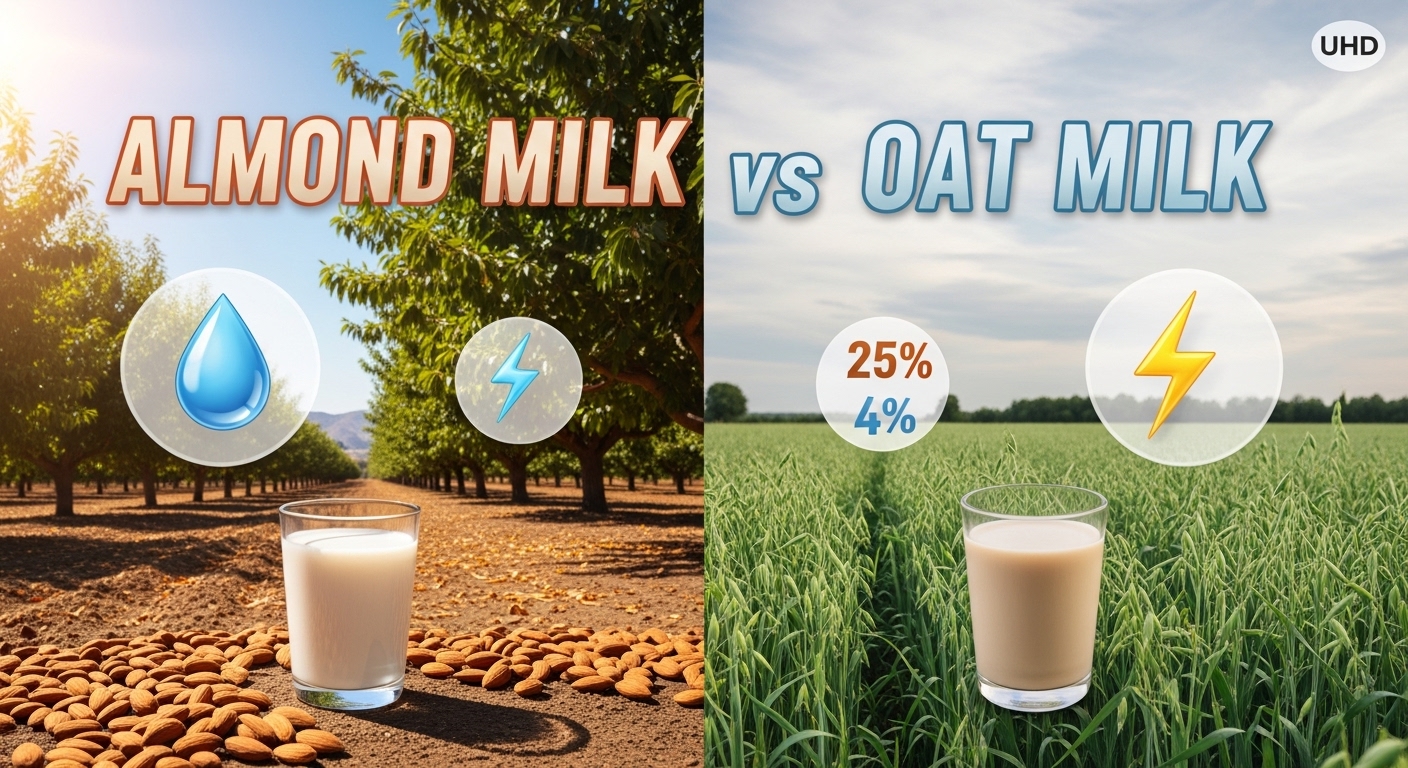
Almond Milk vs Oat Milk: The Ultimate Showdown
We analyzed the nutrition, environmental impact, and coffee performance to declare a definitive winner.
The Plant-Milk Paradox: Healthy Choice or Marketing Hype?
You stand in the grocery aisle, faced with a wall of dairy-free alternatives. The decision seems simple: Almond Milk vs Oat Milk. Yet, you’re caught in a crossfire of conflicting information. Is almond milk draining California’s water supply? Is your favorite oat milk secretly packed with sugar and inflammatory seed oils? This analysis paralysis is a common frustration for health-conscious consumers.
This ultimate guide is designed to solve that problem. We’ve done the deep research, consulted the experts, and run the tests to provide a clear, data-driven verdict. This expert review will provide a comprehensive framework to help you confidently choose the plant-based milk that best aligns with your health goals, your values, and your morning coffee.
The Rise of the Alternatives: How We Got Here
The journey to the current almond vs. oat showdown is a story of shifting consumer priorities. For decades, soy milk was the primary dairy alternative. But in the early 2010s, concerns over soy’s hormonal effects and a growing interest in lower-calorie options propelled almond milk to the top spot. It became the undisputed king of plant-based milks.
Then, around 2018, everything changed. The “third wave” coffee movement, obsessed with quality and taste, discovered a secret weapon: oat milk. As baristas demonstrated its superior ability to steam and create creamy microfoam for latte art, its popularity exploded from niche coffee shops into the mainstream. This rise, as chronicled by Forbes, was less about nutrition and more about performance, fundamentally reshaping the entire dairy-alternative market.

The two leading plant-based milks go head-to-head.
Nutrition Showdown: Calories, Carbs, Protein & The “Clean Label” War
Let’s get straight to the data. Here’s how a typical 1-cup (240ml) serving of unsweetened almond milk compares to standard oat milk. Note that nutritional values can vary significantly by brand.
| Nutrient | Unsweetened Almond Milk | Oat Milk | Winner |
|---|---|---|---|
| Calories | 30-40 | 120-160 | Almond |
| Protein | 1 gram | 2-3 grams | Oat |
| Carbohydrates | 1-2 grams | 15-25 grams | Almond |
| Fiber | < 1 gram | 2-3 grams | Oat |
| Sugar | 0 grams | 7-17 grams | Almond |
| Fat | 2.5 grams | 5-8 grams | Depends on Goal |
Expert Analysis: The Ingredient List
The nutrition facts only tell part of the story. The current trend, as reported by food industry journalists, is the “clean label” war. Consumers are increasingly wary of additives. Many oat milks use industrial seed oils (like canola or sunflower oil) to create their signature creamy texture, a practice criticized in some health circles. Many almond milks use gums (like gellan gum) as thickeners. This has led to the rise of premium brands like Malk and Elmhurst, which market themselves on their simple, gum-free and oil-free ingredient lists. Always read the label.
A registered dietitian offers a professional breakdown of the nutritional pros and cons.
The Coffee Shop Test: Creaminess, Frothing, and Flavor
If you’re a coffee drinker, this is the category that matters most. And here, the winner is clear and undisputed.

The visual difference is clear: oat milk (left) creates a superior foam for lattes compared to almond milk (right).
Expert Verdict: Oat Milk Wins for Coffee
Due to its higher carbohydrate and fat content, oat milk behaves much more like traditional dairy milk when steamed. It creates a rich, velvety microfoam that holds its structure, making it ideal for latte art. Its flavor is also neutral and slightly sweet, complementing the espresso. Almond milk, being lower in fat and protein, often produces a thin, bubbly foam that dissipates quickly. Its nutty flavor can also overpower the coffee. For coffee enthusiasts, a “barista blend” oat milk is the professional standard for a reason.
The Environmental Verdict: Water, Land Use, and Carbon Footprint
The environmental debate is complex. Almond milk’s biggest issue is its massive water footprint. As numerous reports from outlets like The Guardian have detailed, it takes over a gallon of water to grow a single almond, and the majority of the world’s almonds are grown in drought-prone California. Oats, on the other hand, are a rain-fed crop that requires significantly less water.
However, the conversation is evolving. Some oat milk brands have faced scrutiny over the use of glyphosate, an herbicide, in conventional oat farming. For the most eco-conscious consumer, the best choice is organic, glyphosate-free oat milk from a brand that is transparent about its sourcing.
Cost & Accessibility: The Wallet Test
For years, almond milk was the more affordable and widely available option. However, as oat milk’s popularity has soared, its price has become much more competitive. In a typical US grocery store in 2025, a half-gallon of standard almond milk and oat milk from brands like Silk or Califia Farms are often priced within a few cents of each other. Premium, “clean label” versions of both, like Malk or Elmhurst, carry a significant price increase. At this point, for the average consumer, the price difference is negligible.
Final Verdict: Our Top Picks for Every Need
Final Verdict & Recommendations
After a comprehensive review, it’s clear there is no single “best” plant-based milk, but there is a best one for *you*. Our final verdict is a series of recommendations based on your primary goal:
- Best for Coffee & Lattes: Oat Milk. Specifically, a barista blend like Oatly or Califia Farms for its unmatched creaminess and performance.
- Best for Weight Management & Low-Carb/Keto Diets: Unsweetened Almond Milk. Its low calorie and carbohydrate content is unbeatable.
- Best for Environmental Sustainability: Organic Oat Milk. Its lower water usage gives it the edge, especially if you choose a brand that is transparent about its farming practices.
- Best for “Clean” Ingredients: Premium brands like Malk or Elmhurst. This applies to both oat and almond. If your primary concern is avoiding oils and gums, these brands are the clear winners, though at a higher price. You can also learn to make your own.
Ultimately, the **Almond Milk vs Oat Milk** debate is a good problem to have—it’s a sign of a thriving market that offers consumers more choice than ever before. By understanding your own priorities, you can make the perfect choice with confidence.
Sources and Further Reading
Internal Links
- Contribute to Our Food Blog
- AI Studio for Recipe Development
- A Mindful Morning with the Perfect Coffee
Leave a Reply