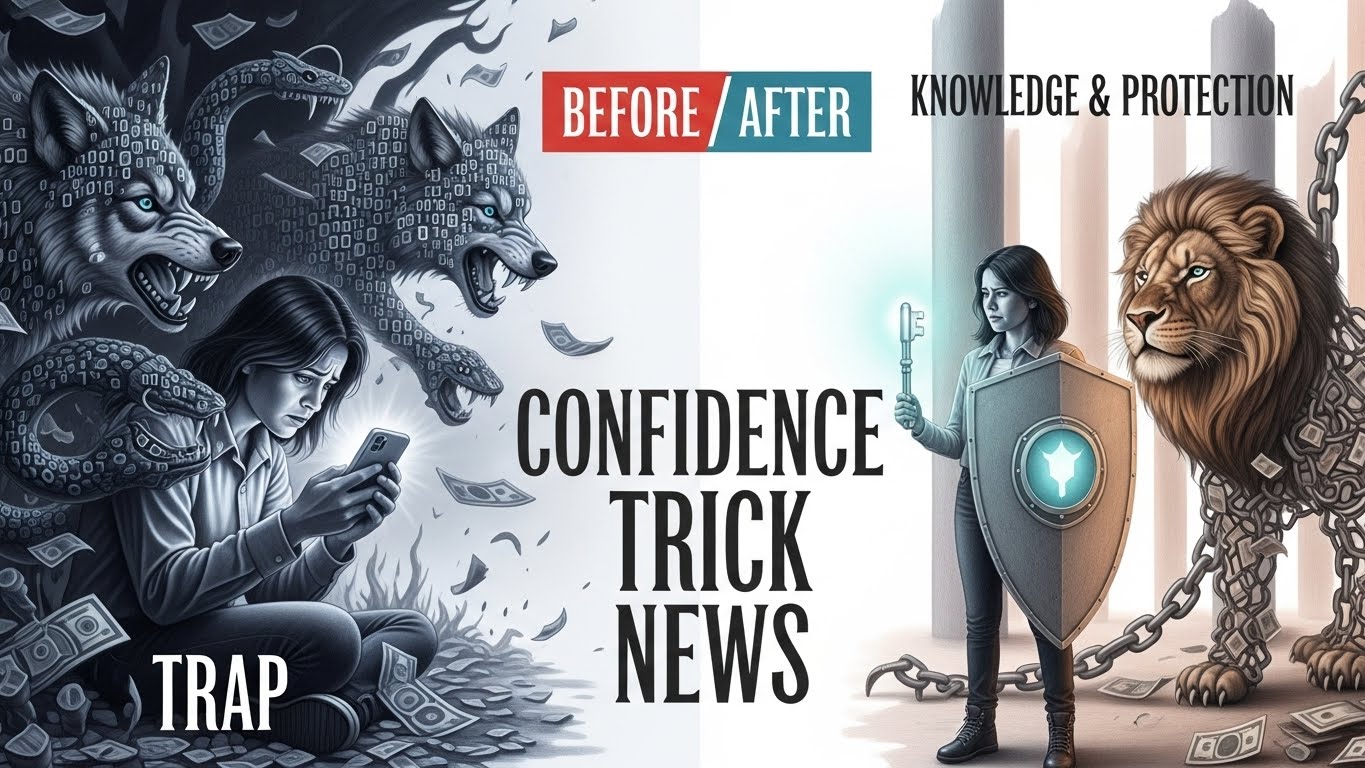
Confidence Trick News: The Survival Guide
From AI voice cloning to crypto “Pig Butchering”—unmasking the industrial-scale fraud targeting your life savings.
The term “Confidence Trick” sounds quaint—like a street hustler playing three-card monte. But in 2025, Confidence Trick News isn’t about petty theft; it is about industrial-scale, AI-driven psychological warfare.
Whether you are a crypto investor, a retiree, or a job seeker, you are a target. With the rise of AI technology creating perfect deepfakes, your eyes and ears can no longer be trusted. This expert review analyzes the latest methodologies used by global crime syndicates and provides a concrete defense strategy.
Evolution of the Grift: From Mail to Metaverse
To understand the modern threat, we must look at the history of the “Con.” Historically, scams relied on the Spanish Prisoner trick (19th century), which evolved into the infamous Nigerian Prince (419) scams of the 1990s.
According to archives from the FBI History, the core mechanic has never changed: the grifter offers a massive reward (greed) in exchange for a small upfront fee. However, the delivery mechanism has shifted from poorly written letters to sophisticated digital personas.
Much like the founder stories of legitimate startups, modern scam rings operate like corporations. They have HR departments, scriptwriters, and IT support—all dedicated to stealing your identity.
Current Review Landscape: The “Pig Butchering” Era
The current landscape of confidence trick news is dominated by one term: Sha Zhu Pan (Pig Butchering). This is a long-game financial fraud where the scammer builds a romantic or platonic relationship with the victim over months before introducing a fake investment opportunity.

2025 Fraud Statistics
- $10 Billion+: Lost to investment scams in 2024 (Source: FBI IC3).
- AI Voice Cloning: Reports up 400% year-over-year.
- Target Demographic: Millennials and Gen X lose more money than seniors, though seniors report more often.
The AI Threat Vector
Scammers are now using tools similar to legitimate AI Studio software to clone voices. A grandparent might receive a call from their “grandson” begging for bail money, and the voice is a 99% match. This is no longer science fiction; it is the daily reality of fraud.
Expert Analysis: The Psychology of Social Engineering
Why do smart people fall for these tricks? It comes down to Social Engineering. Grifters are experts at triggering an “Amygdala Hijack”—a state where fear or excitement overrides the logical part of your brain.
The “Script” of Deception
Scammers use carefully crafted narratives, much like professional short story writing. They introduce a character (the attractive investor, the distressed relative), a conflict (frozen assets, jail), and a resolution that requires your money.
They also exploit modern trends. For example, the natural living community is often targeted with fake “holistic investment” schemes or non-existent organic product MLMs.
Recent reports from Reuters Finance highlight that “Recovery Scams” are the fastest-growing sector. This is where a second scammer contacts a victim claiming they can recover the lost funds—for a fee. It is the ultimate insult to injury.
Multimedia Evidence: Seeing is Believing
To protect yourself, you must see how these operations work from the inside.
Inside the Call Center: Watch how scammers operate in industrial environments.
The AI Threat: Demonstration of real-time voice cloning used in “Grandparent Scams.”
Viral Reaction: See how quickly a “Pig Butchering” text conversation escalates.
Watch Analysis on InstagramComparative Assessment: Old vs. New Tactics
The methods have evolved, but the intent remains the same. Here is how traditional confidence tricks compare to their 2025 counterparts.
| Feature | Traditional Scam (c. 2010) | Modern Grift (2025) | Danger Level |
|---|---|---|---|
| Contact Method | Cold Call / Spam Email | WhatsApp / Dating Apps / LinkedIn | 🔴 Extreme |
| Technique | “Nigerian Prince” (Greed) | “Pig Butchering” (Romance + Crypto) | 🔴 Extreme |
| Payment | Western Union / Gift Cards | USDT / Bitcoin / Zelle | 🟠 High |
| Impersonation | Generic Authority Figure | AI Cloned Voice of Family | 🔴 Extreme |
The shift to cryptocurrency has made tracing funds nearly impossible. If you are interested in the legitimate side of finance vs. the scams, read our Blogsternation finance guide.
🏁 The Expert Verdict: Zero Trust Architecture
The only way to survive the modern confidence trick landscape is to adopt a “Zero Trust” policy for your personal life.
✅ Immediate Protection Steps
- Freeze Your Credit: Do this now at Equifax, Experian, and TransUnion.
- Family Safe Word: Establish a code word to verify identity against AI voice clones.
- Reverse Image Search: Check every new online contact’s photo.
- 2FA Everything: Use an Authenticator app, not SMS (which can be SIM swapped).
❌ What NOT To Do
- Never Trust Caller ID: Numbers are easily spoofed. Hang up and call back.
- Never Pay to “Verify”: Legitimate jobs/prizes never ask for money upfront.
- Ignore “Recovery Agents”: Anyone claiming they can hack the scammers is a scammer.

Stay vigilant. In the digital age, skepticism is your strongest shield.
Leave a Reply