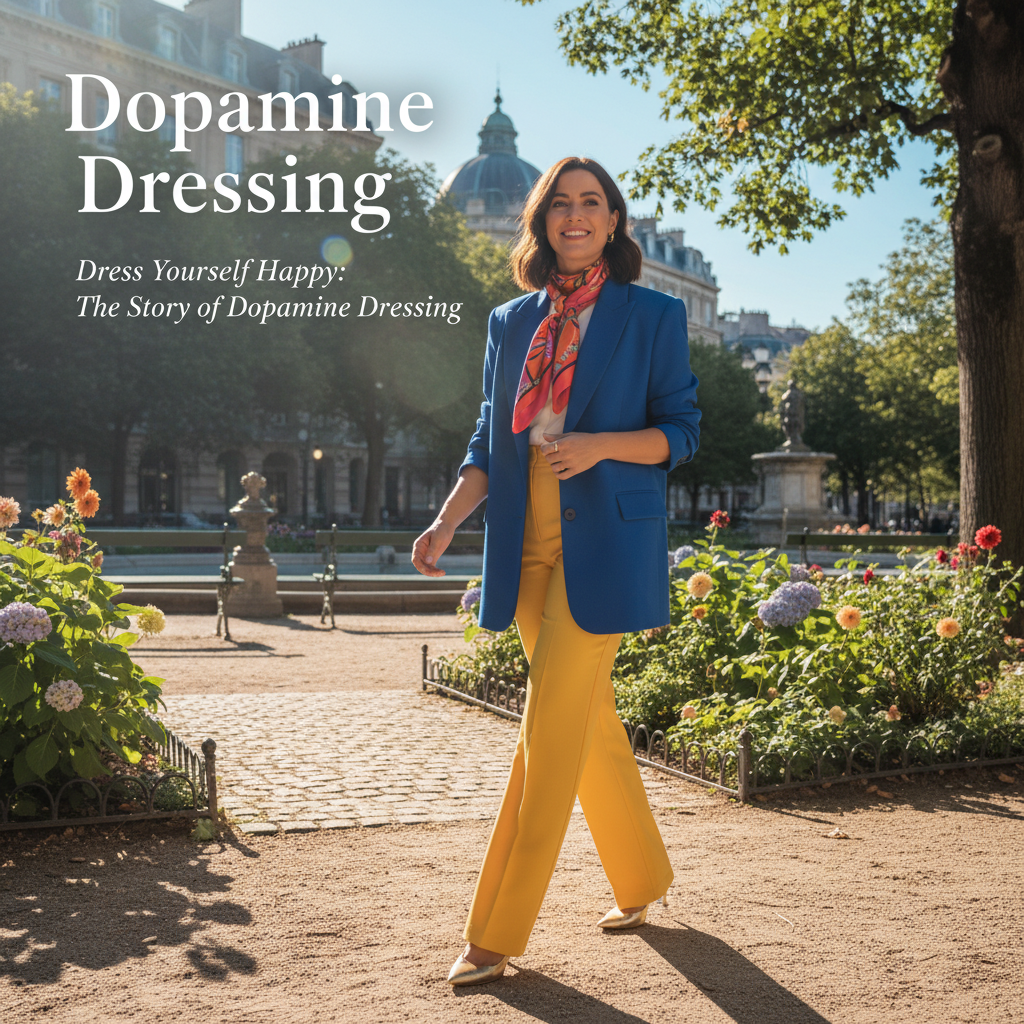
Dopamine Dressing: Dress Yourself Happy | The Story of Dopamine Dressing
By Mohsin Naqwi | Published on Narrative Guest
In a world that often feels grey and uncertain, a vibrant revolution has taken over our wardrobes. It is not merely about fashion trends or seasonal palettes; it is a psychological reclamation of joy. Welcome to the era of Dopamine Dressing: Dress Yourself Happy.
For decades, fashion was dictated by rules—no white after Labor Day, limit patterns, and ensure your belt matches your shoes. However, a seismic shift occurred in the global consciousness, particularly following the isolation of the early 2020s. We stopped dressing for the boardroom or the gala and started dressing for the mind. “Dopamine Dressing” is the intentional practice of wearing clothes that boost your mood, increase confidence, and stimulate the release of dopamine, the brain’s “feel-good” neurotransmitter.
This comprehensive guide explores the intersection of aesthetic choices and neurochemistry. We delve into the history, the science of color psychology, and practical ways to curate a wardrobe that doesn’t just look good, but feels scientifically jubilant.
The Science of Enclothed Cognition
To understand why a bright yellow sweater might make you smile, or why a sharp blazer makes you feel powerful, we must look at the concept of “Enclothed Cognition.” Coined by researchers Hajo Adam and Adam Galinsky in 2012, this term describes the systematic influence that clothes have on the wearer’s psychological processes.
The theory suggests that clothing carries symbolic meaning. When we put on an item of clothing, we are not just covering our bodies; we are embodying the characteristics associated with that garment. If you associate silk with luxury and relaxation, wearing it physically lowers your cortisol levels. If you associate neon colors with energy and parties, wearing them can artificially induce a state of alertness and excitement.
According to Psychology Today, dopamine is a type of neurotransmitter used by the nervous system to send messages between nerve cells. It plays a major role in how we feel pleasure. While we often associate dopamine with food or exercise, visual stimuli—including the reflection we see in the mirror—are potent triggers.

Color Theory: The Language of Emotion
While texture and silhouette play a role, color is the protagonist in the story of dopamine dressing. The electromagnetic spectrum of visible light impacts the hypothalamus, the part of the brain governing hormones and the endocrine system.
1. The Energy of Warm Tones
Red, orange, and yellow are long-wavelength colors. They are stimulating and are often associated with heat, fire, and the sun.
- Red: The color of passion, danger, and power. Wearing red has been statistically shown to increase heart rate and make the wearer feel more dominant. It is a “power suit” staple for a reason.
- Yellow: The hue of optimism. As seen in the image above, pairing yellow with contrasting tones creates a visual vibration that signals creativity and friendliness.
- Orange: A polarizing color that represents social connection and enthusiasm. It combines the physical energy of red with the cheerfulness of yellow.
2. The Serenity of Cool Tones
Blue, green, and purple correspond to short wavelengths. They are soothing and linked to nature, water, and the sky.
- Blue: Trust, intelligence, and calm. Dark blues suggest authority, while lighter blues suggest tranquility.
- Green: The color of balance and growth. In the context of natural living, green connects us to the organic world, reducing anxiety.
- Purple: Historically associated with royalty and spirituality. It stimulates the imagination.
Dopamine Dressing: Dress Yourself Happy – The History
While the term “Dopamine Dressing” went viral on TikTok and Instagram post-2020, the concept isn’t new. Ancient civilizations used chromotherapy (color therapy) to treat ailments. However, the modern fashion interpretation gained traction as a direct counter-response to the “sad beige” minimalism that dominated the 2010s.
Publications like Vogue noted a shift in runway collections moving away from neutrals toward “high-octane” hues as a way to signal hopefulness. Similarly, Harper’s Bazaar identified this trend not as a fleeting fad, but as a lifestyle shift where personal joy takes precedence over traditional fashion rules.

Curating Your Happy Wardrobe
Implementing “Dress Yourself Happy: The Story of Dopamine Dressing” into your life does not require a complete wardrobe overhaul. It requires a mindful audit of what you own and how it makes you feel.
Step 1: The Emotional Audit
Open your closet. Pull out your favorite item. Ask yourself: How does this make me feel? If the answer is anything less than “fantastic,” “capable,” or “happy,” reconsider its place in your rotation. A closet organized by hue, as depicted above, can actually reduce decision fatigue and spark creativity in the morning.
Step 2: Texture and Touch
Dopamine isn’t just visual; it’s tactile. The feeling of a high-quality leather accessory or a hand-woven textile can ground you. For example, the structural elegance of a Polène bag offers a sensory experience of luxury and order. The smooth curves and distinct leather grain provide a tactile satisfaction that complements the visual joy of an outfit.
Step 3: Accessorizing for the Timid
If wearing a head-to-toe electric blue suit feels daunting, start small. Accessories are the gateway to dopamine dressing. A neon scarf, a statement necklace, or a unique handbag can elevate a neutral outfit and provide a “pop” of joy without overwhelming the senses.
Consider the intricate detail of a beaded bag. The play of light on the beads and the nostalgic craftsmanship evoke memories of childhood playfulness or vintage glamour—both potent triggers for dopamine release.

Personalization Over Trend
The most critical aspect of “Dopamine Dressing: Dress Yourself Happy” is that it is intensely personal. For one person, happiness might be a hot pink tulle skirt. For another, it might be the clean, sustainable lines found in natural living aesthetics—linens, organic cottons, and earth tones that signal a connection to the planet.
Fashion psychologist Dr. Dawnn Karen advises that you should dress for the mood you want to have, not necessarily the mood you are currently in. This is called “mood enhancement dressing.” Conversely, “mood illustration dressing” is when you dress to match your current feelings. Dopamine dressing leans heavily into enhancement—using the external (clothing) to hack the internal (brain chemistry).
Conclusion: The Narrative of You
The story of dopamine dressing is ultimately the story of you. It is a narrative you write every morning when you get dressed. By choosing items that spark joy, you are prioritizing your mental well-being. Whether it is through the bold saturation of a summer dress, the intricate detail of a beaded accessory, or the comforting weight of a structured bag, you have the power to dress yourself happy.
In a complex world, your wardrobe is one of the few environments you can totally control. Make it a happy one.
Frequently Asked Questions
What is Dopamine Dressing?
Dopamine dressing is the practice of wearing clothing that boosts your mood and confidence. It relies on the psychological concept of “enclothed cognition,” suggesting that the attributes of our clothes can influence our psychological state and performance.
Does Dopamine Dressing have to be colorful?
Not necessarily. While bright colors are often associated with the trend due to color psychology (e.g., yellow for happiness), dopamine dressing is subjective. If wearing all black makes you feel sleek, powerful, and happy, then that is your version of dopamine dressing.
How do I start dressing for happiness?
Start by auditing your closet to find items that bring you joy. Experiment with accessories like colorful bags or jewelry. Focus on textures that feel good against your skin, and try to dress for the mood you want to achieve rather than the mood you are currently in.
Leave a Reply